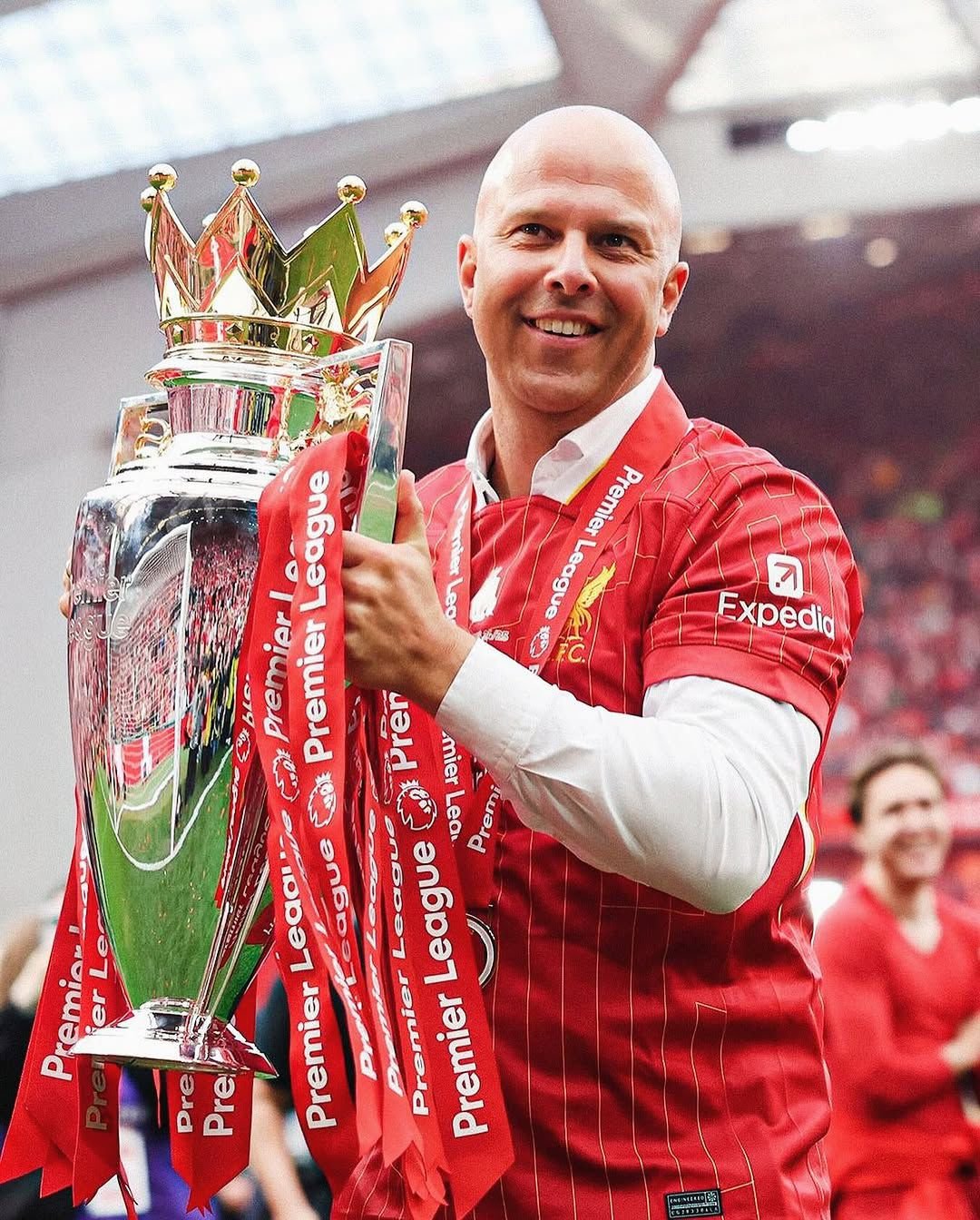
Image credited by @Instagram
The story of Liverpool Football Club has always been one of evolution, resilience, and reinvention. In November 2025, that story entered a new and fascinating chapter under the leadership of Arne Slot — a tactician whose arrival has brought fresh energy, innovation, and tactical sharpness to Anfield. As the Dutch manager settles deeper into his role, fans across Merseyside and beyond are beginning to see the true shape of his footballing philosophy, and the results are speaking volumes. From his first training sessions at Kirkby to the roaring atmosphere under the Anfield lights, Slot’s influence is transforming Liverpool in both style and spirit.
Slot stepped into one of football’s most demanding roles — succeeding Jürgen Klopp, the charismatic manager who had redefined the club’s identity over the past decade. Taking over from such a beloved figure was never going to be easy, but Slot has approached the task with quiet confidence, tactical intelligence, and humility. His focus has been on creating a modern, adaptive system — one that respects Liverpool’s high-intensity DNA while introducing new layers of control and precision in possession. This balance has begun to define Liverpool’s new era: fast, fluid, and fiercely competitive.
What stands out most about Arne Slot’s Liverpool is the clear structure and the tactical discipline he’s instilled. His teams at Feyenoord were known for their organisation and pressing patterns, and now those principles are being adapted to Premier League intensity. Players like Dominik Szoboszlai, Alexis Mac Allister, and Darwin Núñez have flourished under his guidance, each finding renewed confidence and clarity in their roles. Even the defensive line — often tested in recent seasons — appears more composed, with Virgil van Dijk once again commanding from the back like the leader he’s always been.
Off the pitch, Slot has won admiration for his calm, articulate approach. He doesn’t chase headlines; instead, he focuses on details — tactical fine-tuning, player development, and maintaining harmony within the squad. That steady, grounded demeanour resonates well in a city that values authenticity and hard work. Liverpool fans, famous for their deep connection with the club, have begun to warm to Slot’s methods and philosophy, appreciating his modern take on “The Liverpool Way.”
November 2025 finds Liverpool competing strongly across all fronts — a clear sign that Slot’s transition is moving faster than many predicted. His intelligent rotations, use of academy talent, and sharp in-game adjustments have kept the Reds in contention both domestically and in Europe. The journey is still in its early stages, but the vision is clear: to build a team capable of sustainable success, one that combines intensity with intelligence, passion with purpose.
Arne Slot may not yet have the trophy cabinet to rival his predecessor, but his Liverpool project already feels like something special — a fusion of tradition and innovation that reflects where modern football is heading. And as Anfield continues to echo with belief, there’s a growing sense that the Dutchman’s chapter in Liverpool’s history could become one of its most compelling yet.
Arne Slot’s Tactical Vision for Liverpool’s New Era
When Arne Slot took charge at Liverpool, many wondered how his footballing philosophy would blend with the club’s traditional high-energy identity. Known for his structured yet attacking style at Feyenoord, Slot has seamlessly integrated those principles into the Reds’ DNA. His approach revolves around tactical intelligence, positional awareness, and collective responsibility — concepts that are now defining Liverpool’s gameplay in 2025. Unlike some managers who impose rigid systems, Slot prefers adaptability, allowing his players to express creativity within a well-organised framework. That freedom within structure has become a hallmark of his early months at Anfield.
From the outset, Slot prioritised possession-based football with vertical intent. He encourages quick transitions from defence to attack but insists on control through measured build-up. Liverpool’s midfield — once criticised for inconsistency — now operates with greater rhythm and coordination. Alexis Mac Allister has become the fulcrum, dictating tempo from deep, while Dominik Szoboszlai provides energy and precision further forward. Slot’s use of hybrid roles has added unpredictability; Trent Alexander-Arnold’s shift into an inverted midfield position remains central to how Liverpool dominate territory and dictate play.
Pressing, always a Liverpool trademark, has also evolved under Slot. While Klopp’s gegenpressing relied heavily on intensity and physicality, Slot’s version emphasises structure and timing. The press now begins higher up the pitch, often initiated by Darwin Núñez or Mohamed Salah, supported by compact midfield lines. The objective is to trap opponents rather than overwhelm them, forcing turnovers in strategic zones. This refined pressing model allows Liverpool to conserve energy and maintain tactical discipline over 90 minutes — a crucial adjustment in a season packed with fixtures.
Defensively, Slot’s Liverpool are more balanced and composed. The backline plays with improved spacing and communication, particularly when facing transitions. Virgil van Dijk’s leadership remains central, but the emergence of Ibrahima Konaté and Joe Gomez has given Slot options to rotate without losing stability. The full-backs no longer bomb forward recklessly; instead, they operate in tandem with midfield pivots, ensuring compactness. This defensive recalibration has seen Liverpool concede fewer counter-attacking goals, one of their previous Achilles’ heels.
Perhaps the most striking transformation under Slot is in attacking fluidity. The front three operate interchangeably, constantly rotating to disorganise defences. Salah continues to be the clinical finisher, but his movements are now complemented by Núñez’s relentless running and Luis Díaz’s width. Slot’s tactical tweaks have also brought new dimensions — late runs from midfielders, overlapping full-backs at calculated moments, and increased emphasis on set-piece routines. These micro adjustments have made Liverpool less predictable and more efficient in the final third.
Slot’s influence extends beyond the white lines of the pitch. Training sessions at the AXA Training Centre in Kirkby are reportedly more technical and detail-oriented than before. Every drill has purpose — from possession rondos to defensive positioning. He spends considerable time analysing opposition tendencies, ensuring Liverpool enter every match prepared with flexible game plans. This meticulous preparation is reminiscent of elite European coaches, positioning Slot as part of the new generation of analytical managers reshaping football.
Another key aspect of Slot’s Liverpool is player development. Young talents like Ben Doak, Conor Bradley, and Stefan Bajčetić have been given chances to integrate with the senior squad. Slot believes in growth through opportunity, balancing experience with youth. His man-management style — approachable yet demanding — fosters trust and accountability. Players have spoken about his clear communication and willingness to explain tactical nuances, making it easier for them to adapt to his system.
Liverpool supporters, famously passionate and analytical themselves, have quickly recognised the changes. Anfield’s energy remains electric, but there’s now a noticeable composure to the team’s play — a reflection of Slot’s calm influence. He’s not trying to replicate Klopp; he’s building something authentically his own. This authenticity resonates deeply in Liverpool, a city that values honesty and effort over hype. As the season progresses, fans sense they’re witnessing the early foundation of a long-term project built on intelligence, identity, and innovation.
Arne Slot’s tactical blueprint for Liverpool is still evolving, but its early impact cannot be ignored. In a league as competitive as the Premier League, adaptability is key — and Slot’s system is proving flexible enough to thrive. Whether facing Manchester City’s possession dominance or Newcastle’s pressing aggression, Liverpool now approach games with composure and confidence. It’s clear that Slot hasn’t just taken over Klopp’s legacy; he’s redefining it for a new generation of football at Anfield.
Building Trust and Chemistry in the Dressing Room
When a new manager steps into a club as emotionally charged as Liverpool, the first challenge isn’t tactics — it’s trust. Arne Slot understood that from the moment he arrived at Anfield. His immediate priority was to build strong connections with the players, coaching staff, and wider club personnel. Unlike some managers who assert authority through rigidity, Slot believes in earning respect through clarity and communication. He started by holding one-on-one conversations with senior players such as Virgil van Dijk, Mohamed Salah, and Alisson Becker, listening to their perspectives before laying out his own vision. That mutual respect has been central to the smooth transition Liverpool has experienced in the post-Klopp era.
Slot’s approach to leadership is rooted in transparency. He doesn’t hide behind slogans or vague promises — he tells players exactly what he expects and how they can improve. Training ground insiders have described his style as “direct but fair,” an attitude that has gone a long way in uniting the squad. Younger players feel valued, while experienced heads feel trusted. By giving everyone a voice, Slot has created a sense of shared ownership in the club’s direction. It’s not just Arne Slot’s Liverpool — it’s a collective project where every member contributes to the club’s resurgence.
Team chemistry has visibly improved under Slot’s guidance. The atmosphere at the AXA Training Centre has become lighter yet more focused. Players often speak about how enjoyable the sessions are — competitive but purposeful. Slot’s emphasis on unity has extended beyond tactics, with frequent team-building activities and open discussions about performance. It’s no coincidence that Liverpool’s dressing room now appears more cohesive than in recent seasons. The renewed sense of camaraderie is evident on the pitch, where players fight for each other with renewed intensity.
Communication has become a cornerstone of Slot’s management philosophy. Whether it’s through post-match meetings, video reviews, or tactical briefings, he ensures players understand both successes and mistakes. Slot is known for analysing matches meticulously, highlighting key moments to teach rather than criticise. This method helps players embrace accountability without fear. For young stars like Harvey Elliott and Curtis Jones, that environment fosters confidence — a platform where mistakes are seen as part of growth, not grounds for exclusion.
Another pillar of Slot’s leadership is emotional intelligence. He recognises that managing a squad of diverse personalities requires balance. Some players need a motivational push; others need reassurance. Slot’s ability to read emotions and adapt his tone has made him a respected figure among players. His calm demeanour has also filtered into the team’s performances. Even in high-pressure matches, Liverpool now exhibit composure — an attitude shaped directly by their manager’s temperament. In the unpredictable chaos of Premier League football, that emotional stability has become one of Slot’s greatest strengths.
Slot has also built strong relationships with his backroom team. Assistant coaches, analysts, and fitness staff all play integral roles in his process-driven model. He encourages collaboration, valuing input from every department. That culture of inclusivity mirrors Liverpool’s broader club ethos — one of teamwork, humility, and shared ambition. By aligning everyone behind a common purpose, Slot has ensured the entire operation functions like a unified system rather than isolated parts.
Crucially, Slot has earned the respect of the fans, not through loud declarations but through actions. Supporters have noticed his humility and work ethic — qualities that align perfectly with Liverpool’s values. He attends community events, takes time to speak with supporters, and carries himself with quiet confidence. The connection between manager and city, once thought irreplaceable after Klopp, is slowly being rebuilt. In Liverpool, where football is deeply intertwined with local identity, this bond matters just as much as results on the pitch.
As of November 2025, that trust and chemistry are translating into results. The team looks united, hungry, and emotionally balanced. Slot’s Liverpool plays not just for points but for pride — representing a culture of belief, mutual respect, and ambition. The early signs suggest that this harmony could become the foundation for long-term success. In football, tactics may win matches, but unity wins seasons — and under Arne Slot, Liverpool are rediscovering both.
Arne Slot’s Influence on Player Development and Youth Integration
One of Arne Slot’s most remarkable achievements at Liverpool so far has been his commitment to nurturing young talent. From his first day at Kirkby, he made it clear that the club’s future depended not only on star signings but on developing the next generation of Reds. Slot, having built his reputation at Feyenoord through youth empowerment, carried that philosophy into Merseyside with confidence and purpose. His vision aligns perfectly with Liverpool’s long-standing tradition of promoting from within — a principle deeply rooted in the club’s identity since the Shankly days. In 2025, that philosophy has found new life under Slot’s stewardship.
Liverpool’s academy, already one of the finest in England, has experienced a renewed sense of purpose. Slot has been a regular presence at youth matches, keen to understand the personalities and playing styles of emerging talents. His belief is simple: technical ability must go hand in hand with tactical intelligence. Players such as Ben Doak, Conor Bradley, and Stefan Bajčetić have flourished under his watch, each given real minutes in competitive fixtures rather than token appearances. This hands-on approach signals a shift toward long-term sustainability — a club that builds its own heroes rather than constantly buying them.
In Slot’s system, youth players aren’t just backups; they’re vital components in rotation. His use of the Europa League and Carabao Cup as platforms for development has drawn praise from fans and pundits alike. Unlike some managers who field weakened sides, Slot structures these matches to mirror the tactical setups of Premier League games, ensuring that young players learn within the same framework as the senior squad. This consistency helps them transition smoothly when called upon for major fixtures. It’s a model borrowed from the best academies in Europe — and Liverpool are executing it with confidence.
The Dutchman’s approach to player development goes beyond giving minutes; it’s about education. Every training session under Slot is a masterclass in tactical awareness. He breaks down complex patterns of play into digestible lessons, helping players understand positioning, pressing triggers, and space management. Youngsters are encouraged to ask questions, make mistakes, and learn through experimentation. Slot often reminds them that decision-making, not just physical talent, determines success at the highest level. That educational mindset has already started producing players who think like professionals even before they become regulars.
Senior players have also benefitted from Slot’s developmental ethos. He treats every member of the squad — from Salah to the youngest academy graduate — as a learner. This has rejuvenated the dressing room atmosphere, blending experience with youthful enthusiasm. Veterans like Van Dijk and Alisson have taken mentorship roles, guiding younger teammates during training and matches. This culture of mentorship has deepened the sense of unity and collective responsibility within the team. Slot has essentially built a bridge between generations, ensuring continuity and shared purpose.
Behind the scenes, Liverpool’s coaching infrastructure has been refined to support this growth-focused model. Slot has collaborated closely with academy director Alex Inglethorpe to align tactical principles across all age groups. This “one-club philosophy” ensures that every youth team mirrors the senior team’s style — from pressing shapes to passing rhythms. The result is a seamless pipeline of talent ready to step up when needed. In 2025, this strategy has already paid dividends, with young players not only making appearances but influencing key matches.
Slot’s reputation for trust in youth has also made Liverpool an attractive destination for rising stars across Europe. Talented teenagers view Anfield as a place where opportunity meets excellence. This shift strengthens the club’s recruitment power, helping Liverpool compete not only for trophies but for the continent’s brightest prospects. For a club operating under financial discipline, this balance between youth promotion and strategic signings offers a sustainable path to long-term success.
Perhaps most importantly, Slot’s focus on development resonates with the spirit of the city itself. Liverpool is a place that values hard work, opportunity, and growth — values that mirror the Dutchman’s philosophy. Fans have embraced the sight of academy players thriving alongside world-class professionals, viewing it as a return to authentic football values. Arne Slot hasn’t just changed how Liverpool play; he’s changed how they grow. His legacy may ultimately be defined not only by trophies but by the generation of players who rise under his watch.
Revitalising Liverpool’s Playing Style Under Arne Slot
When Arne Slot took charge at Liverpool, he inherited not only a squad rich in talent but also a legacy of heavy-metal football built under Jürgen Klopp. Slot’s challenge was not to erase that identity but to refine it — to evolve Liverpool’s style into something more controlled, efficient, and sustainable for the modern era. In just a few months, he has achieved a delicate balance between aggression and composure, blending Dutch tactical precision with the emotional intensity that defines Liverpool. The result is a team that plays with both heart and intelligence, capable of switching tempo and tactics seamlessly depending on the opponent.
At the core of Slot’s philosophy lies ball control and intelligent pressing. While Klopp’s Liverpool thrived on chaos and high-octane transitions, Slot prefers to manage matches through structured possession and positional superiority. His players are encouraged to dominate the ball without losing forward intent. Every pass has purpose, every movement is synchronised. This shift has given Liverpool a calmer rhythm, particularly in midfield, where players like Mac Allister, Szoboszlai, and Wataru Endō operate with greater tactical awareness. The midfield now functions as both a shield and a creative hub, dictating the game’s tempo rather than reacting to it.
Slot’s redefined pressing system is one of the most notable changes. Instead of the all-out, relentless counter-pressing of previous seasons, Liverpool now engage in a more calculated approach. The team triggers the press selectively, focusing on cutting passing lanes and forcing opponents into predictable patterns. This refined system allows the Reds to maintain defensive stability and conserve energy — vital in a demanding Premier League campaign. Players speak about the emphasis Slot places on “pressing with the brain, not just the body,” a phrase that captures the essence of his tactical evolution.
In possession, Liverpool’s build-up has become more layered and intricate. The introduction of an inverted full-back role for Trent Alexander-Arnold remains key. Slot uses him as a deep playmaker who drifts into central areas, creating numerical advantages in midfield. This adjustment not only frees Trent to dictate play but also gives Liverpool additional control during transitions. On the left, Andy Robertson provides balance with overlapping runs, ensuring width and unpredictability. The combination of structural discipline and positional interchange has made Liverpool far more adaptable in attacking phases.
The front line under Slot has rediscovered its spark. Mohamed Salah continues to be the focal point, but his role has subtly changed — he now drifts inside more often, linking with midfielders and creating space for overlapping runs. Darwin Núñez, once criticised for inconsistency, has flourished under Slot’s guidance. The Uruguayan’s raw energy is being channelled more effectively, turning chaos into precision. Meanwhile, Luis Díaz’s directness on the left and Cody Gakpo’s versatility give the attack multiple dimensions. Slot’s rotations and in-game tactical tweaks keep opposition defences guessing, allowing Liverpool to control matches without relying on individual brilliance alone.
Defensively, the improvements are just as visible. Slot has placed great emphasis on positional discipline and compactness. The team now defends as a unit, reducing the gaps that previously left them vulnerable to counters. Communication between Van Dijk, Konaté, and goalkeeper Alisson has been fine-tuned through endless video analysis and repetition in training. Even when Liverpool push high, there’s a clear structure that allows for rapid recovery. The result is fewer chaotic moments and a greater sense of calm under pressure — something that has often eluded the Reds in recent seasons.
Set pieces have also become a valuable weapon under Slot. His coaching staff dedicate sessions specifically to dead-ball scenarios, and the results have been tangible. Liverpool have scored crucial goals from corners and indirect free kicks, often through well-rehearsed routines. These fine details demonstrate Slot’s analytical side — his belief that marginal gains, when accumulated, can decide tight matches. It’s this obsession with detail that’s gradually reshaping Liverpool’s entire approach to football.
What truly defines Liverpool’s new playing style, however, is its maturity. Slot has created a team that knows when to accelerate and when to pause, when to press and when to protect. The Reds now play with a level of control reminiscent of Europe’s elite — calm in possession, ruthless in execution. This evolution hasn’t diluted Liverpool’s passion; it’s refined it. Under Arne Slot, Liverpool are proving that intensity and intelligence can coexist, ushering in a new era of sophisticated football that still beats with the unmistakable heart of Anfield.
Liverpool’s Early Season Form and Key Performances Under Arne Slot
Liverpool’s 2025 campaign under Arne Slot has been nothing short of revitalising. After a summer of tactical adjustments, new training routines, and an emphasis on controlled possession, the Reds entered the season with a renewed sense of purpose. By November 2025, their performances across domestic and European competitions reflect a team not just finding its rhythm but asserting dominance. The transformation, while gradual, has been evident in both results and style. Liverpool no longer rely solely on emotional surges; they play with calculation, structure, and confidence — hallmarks of Slot’s methodical influence.
From the opening weeks, Liverpool set the tone with composed, well-managed victories. Their balance between attack and defence stood out immediately, particularly in high-profile clashes. Against teams like Tottenham and Manchester United, Liverpool displayed an ability to control tempo — pressing when necessary and retreating intelligently when under threat. The adaptability has been striking; the Reds can now win both gritty, low-scoring contests and free-flowing attacking battles. Slot’s hallmark, a disciplined but flexible system, allows the team to remain unpredictable while maintaining identity.
Darwin Núñez’s resurgence has been a major talking point. Once seen as erratic, the Uruguayan striker has evolved into a consistent and confident forward under Slot. His movement has become more purposeful, his finishing more refined. Slot’s decision to use Núñez as both a traditional number nine and a drifting forward has paid dividends, confusing defenders and opening space for teammates. Mohamed Salah, too, continues to thrive, combining his trademark goalscoring instincts with an increased playmaking role. Together, they’ve formed a dynamic partnership that reflects Slot’s philosophy of fluid attacking interplay.
Midfield has been another area of transformation. Under Slot’s direction, the trio of Mac Allister, Szoboszlai, and Endō (with Curtis Jones rotating in) has developed remarkable chemistry. Their understanding of space and timing allows Liverpool to dictate games with authority. Szoboszlai’s energy and creativity complement Mac Allister’s control and vision, while Endō’s defensive discipline ensures balance. The improvement in midfield structure has given Liverpool a stronger foundation, enabling their attacking stars to shine without compromising defensive security. It’s a balance the club had struggled to find in recent years — until now.
Defensively, Slot’s Liverpool have rediscovered their resilience. Van Dijk looks rejuvenated — his reading of the game as sharp as ever — while Konaté’s athleticism provides a perfect counterbalance. The full-backs, Alexander-Arnold and Robertson, operate with greater awareness of when to push forward and when to hold their shape. The result has been fewer moments of defensive chaos and a steadier backline. Even Alisson’s distribution has improved, as Slot encourages the goalkeeper to initiate attacks with calm precision rather than rushed long balls. This newfound composure at the back has become a defining feature of Liverpool’s season.
In Europe, Slot’s tactical maturity has been on full display. Whether in the Champions League or domestic cup ties, Liverpool approach matches with a level of strategic flexibility rarely seen before. They can shift from a 4-3-3 to a 4-2-3-1 or 3-2-5 formation mid-match, depending on the opposition’s shape. Slot’s emphasis on positional interchange keeps opponents guessing, while his in-game adjustments demonstrate a deep understanding of modern football dynamics. It’s this blend of strategy and adaptability that has positioned Liverpool among Europe’s most tactically advanced teams of 2025.
One of the most encouraging signs of Slot’s tenure so far is the collective spirit within the squad. Players celebrate goals together, defend together, and communicate constantly — traits that suggest not just tactical harmony but emotional unity. Slot’s influence off the pitch is as strong as his impact on it. His calm leadership and clear communication style have created an environment of mutual respect and accountability. When things go wrong, he doesn’t deflect blame; he dissects mistakes and moves forward — a trait fans deeply admire.
Supporters have also noticed Liverpool’s improved consistency. Under previous regimes, the team sometimes struggled to maintain intensity across competitions. Under Slot, that problem seems to be fading. Each match, regardless of the opponent, carries the same focus and drive. Players who were once peripheral — like Joe Gomez, Kostas Tsimikas, and Harvey Elliott — have found renewed importance in rotation roles. Slot’s use of the full squad has not only reduced fatigue but also fostered a healthy competitive spirit that keeps everyone sharp.
As November 2025 unfolds, Liverpool’s position near the top of the Premier League table reflects the fruits of Slot’s labour. Performances are mature, tactical, and grounded in a clear footballing vision. The early signs point to a manager who has successfully combined pragmatism with ambition — and a squad that believes deeply in his process. Liverpool under Arne Slot aren’t just chasing trophies; they’re redefining how success is built — through structure, patience, and relentless pursuit of excellence.
Arne Slot’s Impact on Liverpool’s Culture and Club Identity
Every great Liverpool manager has left an imprint on the club’s identity — from Shankly’s working-class ethos to Klopp’s emotional intensity. Arne Slot’s influence, while still emerging, is already redefining what it means to play for and represent Liverpool. He has introduced a culture of composure, respect, and calculated passion — traits that perfectly balance the city’s fiery energy with the demands of modern football. His presence has restored a sense of unity, where every department of the club, from the academy to the first team, operates under a single philosophy: intelligent football built on togetherness and hard work.
From the moment Slot arrived at Anfield, he emphasised the importance of humility and collaboration. He reminded players and staff that success would be achieved collectively, not through individual brilliance alone. This message resonated deeply, especially within a club where teamwork and solidarity are part of its DNA. Slot’s insistence on mutual respect — between players, coaches, analysts, and fans — has fostered a calmer, more connected environment. The once fiery emotional waves that often followed Liverpool defeats have been replaced by reflection and focus. That shift in mentality has allowed the Reds to remain balanced even during tough spells, proving that Slot’s leadership extends far beyond tactics.
Culturally, Slot has embraced Liverpool’s heritage rather than reinventing it. He has studied the club’s history, often referencing past icons in meetings to remind players of the standards they uphold. But while he honours tradition, he also encourages evolution. He speaks about “modern intensity” — a form of energy expressed not just through physical running but through mental sharpness and tactical understanding. Players are taught that composure under pressure is as vital as commitment. This hybrid mindset — rooted in passion but guided by intelligence — has begun to define Slot’s Liverpool.
In the community, Slot has also become a respected figure. He participates in local charity events, interacts with fans, and frequently praises the city’s resilience and character. His humility and quiet humour have endeared him to Liverpudlians, who value authenticity above all else. Supporters describe him as “genuine,” a term not used lightly in a city that reads sincerity quickly. This emotional connection between the manager and supporters has rekindled a sense of belonging that was feared to be lost after Klopp’s departure. Slot has shown that leadership doesn’t need to be loud to be powerful — sometimes calm authority inspires more than charisma.
Within the club, Slot’s influence on everyday operations is evident. He has encouraged cross-department collaboration, ensuring that data analysis, scouting, and sports science all align with the same football vision. His trust in specialists has modernised Liverpool’s approach, combining human intuition with technological precision. Slot doesn’t see analytics as a replacement for instinct but as a tool to refine it. That progressive outlook has impressed both players and staff, reaffirming Liverpool’s reputation as one of Europe’s most forward-thinking clubs.
The players themselves often speak about how Slot’s culture fosters accountability. Every individual understands their role, responsibilities, and the importance of preparation. There’s a quiet professionalism about the squad now — a sense of focus that reflects their manager’s demeanour. Mistakes are analysed, not punished; effort is praised, not assumed. Even the body language on the pitch tells a story — less frustration, more communication, and a collective determination to implement the plan. Slot has effectively built a culture where players play for each other rather than for individual accolades.
A major part of this transformation lies in emotional management. Slot believes that football success depends as much on mentality as on tactics. He has introduced mental conditioning programmes, working with psychologists to help players handle pressure. This holistic approach ensures Liverpool compete not just physically but psychologically. It’s why the team now responds to setbacks with calm focus instead of emotional collapse. That balance has become one of Liverpool’s biggest strengths in tight matches — the ability to stay level-headed while maintaining intensity.
What’s most impressive is how Slot has managed to merge Liverpool’s historic passion with a new-age professionalism. His philosophy resonates with both the players and the city: emotional but intelligent, ambitious yet grounded. The result is a club culture that feels both modern and timeless — deeply connected to its roots but confident in its evolution. Arne Slot hasn’t simply taken over Liverpool; he’s redefined how the club sees itself, blending respect for the past with clarity for the future. In doing so, he’s building a foundation strong enough to carry Liverpool into another golden era — one shaped not by noise, but by purpose.
Arne Slot’s Managerial Philosophy and Its Impact on Liverpool’s Playstyle
Arne Slot’s arrival at Liverpool has introduced a refreshing and highly analytical footballing philosophy rooted in control, adaptability, and proactive pressing. Unlike Jürgen Klopp’s emotionally charged “heavy-metal football,” Slot’s approach is more balanced, marrying structure with creativity. Since taking over in 2025, his tactical discipline and technical emphasis have begun shaping Liverpool’s identity into a more modern European powerhouse that thrives on intelligent movement and efficient ball retention.
Slot believes football success stems from clarity of roles and constant positional awareness. His methods draw inspiration from Dutch total football, but with a pragmatic twist. Players are trained to think quickly, rotate intelligently, and maintain width during attacking phases. This ensures Liverpool no longer rely purely on transitions or counter-pressing but also dominate possession, stretching opponents and dictating tempo — something visibly evident in the Reds’ November 2025 performances.
A hallmark of Slot’s system is his use of inverted full-backs and attacking midfielders who drop deep to facilitate progression. Trent Alexander-Arnold has found renewed importance under this structure, shifting seamlessly between defence and midfield. This tactical evolution has allowed Liverpool to sustain pressure in the opponent’s half while remaining defensively compact. Slot’s Liverpool are methodical yet unpredictable — a rare balance that’s beginning to redefine Premier League tactical discussions.
Training sessions under Slot focus on positional patterns, pressing triggers, and rehearsed build-up movements. He insists on rhythm and repetition until players execute transitions instinctively. The midfield trio often operates as a pivot of precision, with Alexis Mac Allister and Dominik Szoboszlai excelling as fluid controllers rather than static playmakers. The result is smoother progression from defence to attack, making Liverpool’s transitions both measured and deadly.
Slot’s calm, analytical presence contrasts Klopp’s passionate touchline persona, but the Dutchman’s authority is undeniable. His man-management relies on respect, openness, and strategic communication. Players speak of a manager who dissects their game in detail, explaining not only what went wrong but why — and how to fix it. This approach has created a sense of ownership among the squad, empowering individuals to take tactical responsibility on the pitch.
In attack, Slot encourages versatility. Forwards are urged to rotate positions, making Liverpool’s front line unpredictable. Mohamed Salah’s drifting movements, Darwin Núñez’s improved link-up play, and Cody Gakpo’s tactical adaptability have flourished in this system. The Reds’ attacking unit is no longer dependent on raw pace; it thrives on intelligent spacing and timing — the hallmarks of Slot’s philosophy.
Defensively, Liverpool’s structure has tightened. Slot prioritises compactness and high defensive IQ, ensuring players understand when to press collectively and when to retreat. The backline moves as a unit, reducing exposure to long balls — a weakness of previous seasons. Goalkeeper Alisson Becker’s distribution also plays a vital role, initiating quick build-ups that align with Slot’s principles of control and composure.
Off the pitch, Slot’s data-driven mindset has brought a new analytical culture to Liverpool’s staff. From performance tracking to tactical modelling, every detail is quantified and reviewed. This fusion of science and instinct marks a new era at Anfield — one where decision-making is guided as much by statistics as by football intuition.
Ultimately, Arne Slot’s influence on Liverpool extends beyond tactics; it represents a philosophical transformation. His calm authority, attention to detail, and modern football intellect are positioning Liverpool not only as Premier League contenders but also as pioneers of a more evolved, possession-oriented English game.
Call to Action: Standing Behind Arne Slot’s Liverpool Revolution
As Liverpool embarks on a new chapter under Arne Slot, the message to fans, players, and the wider football community is clear — this is the time to rally behind the team with full belief and unity. Slot’s leadership marks a transformative moment, one that demands patience, support, and collective vision. The Dutchman’s philosophy isn’t built for overnight miracles; it’s constructed for long-term success grounded in intelligence, adaptability, and sustainable growth.
For Liverpool supporters, the call is to embrace evolution over nostalgia. Jürgen Klopp’s era brought extraordinary triumphs, but every era in football must give way to new ideas. Slot’s version of Liverpool is not about replacing the past but building upon it. His emphasis on structure, tactical versatility, and youth integration aligns perfectly with the club’s historic values of resilience and innovation. This transition is not merely managerial — it’s generational, laying the foundation for a decade of smart, modern football.
Fans at Anfield and beyond are now witnessing a Liverpool side that reflects 2025’s footballing trends: precision pressing, intelligent rotation, and technical finesse. The team’s progress might come with moments of challenge, but that’s precisely what great football transformations require. Every win, draw, and lesson under Slot contributes to shaping a resilient, future-ready Liverpool. As supporters, your faith and energy remain the heartbeat that fuels this evolution.
Liverpool’s local community also plays a crucial part in this journey. Slot’s ethos of hard work and unity mirrors the spirit of Merseyside itself — a city built on pride, perseverance, and passion. Whether through matchday presence, fan forums, or grassroots initiatives, supporters can continue to strengthen the bond between club and city. When Anfield roars in sync with Slot’s vision, it becomes more than a stadium — it becomes the fortress of belief that drives players to push boundaries.
The club’s direction under Slot is as much about developing talent as it is about winning trophies. Young players like Ben Doak, Conor Bradley, and Jarell Quansah are gaining exposure to top-level football through a system designed to nurture intelligence and courage. This investment in youth reflects a deeper mission — to sustain Liverpool’s competitive edge for the future rather than relying solely on established stars. The supporters’ encouragement of this youth movement can make a lasting impact, reinforcing Liverpool’s status as a breeding ground for brilliance.
For global fans watching from afar, this is the perfect moment to amplify Liverpool’s story. Share the excitement, the tactical brilliance, and the progress unfolding each week. Social media, fan blogs, and discussions can all contribute to a unified voice — one that showcases belief in Arne Slot’s methods and confidence in Liverpool’s direction. This digital unity extends Anfield’s reach far beyond the city’s borders, turning local passion into global momentum.
Businesses and community organisations can also play their part by continuing to support local football initiatives. The new Liverpool era under Slot is about inclusivity and shared pride. Every fan-led project, local collaboration, or charitable event strengthens the identity that makes Liverpool not just a football club but a cultural pillar of the city.
So, to every supporter, the call to action is simple yet powerful: stand behind Arne Slot’s vision. Believe in the process, celebrate the progress, and contribute to the journey with unwavering passion. Liverpool’s next era of greatness isn’t just being managed — it’s being built from the ground up, with every fan playing a part.
Now is the time to show the world that Liverpool doesn’t merely adapt — it evolves. With Arne Slot at the helm and the city united in purpose, the stage is set for another golden chapter in the club’s illustrious story. Together, Liverpool can transform modern football once again.
AI Overview: Understanding Arne Slot’s Tactical Revolution at Liverpool
Arne Slot’s arrival at Liverpool in 2025 represents one of the most significant managerial transitions in recent Premier League history. After Jürgen Klopp’s emotional departure, the appointment of Slot marked a new direction — one rooted in tactical modernity, structural intelligence, and long-term sustainability. The AI overview below analyses how Slot’s managerial principles, decision-making patterns, and footballing data contribute to Liverpool’s evolving identity both on and off the pitch.
Slot’s tactical DNA is heavily inspired by his time in the Eredivisie, particularly at Feyenoord, where he developed a reputation for creating compact, fluid, and attack-minded teams. His approach combines the precision of data analysis with the artistry of positional play — a fusion that has modernised Liverpool’s performances. Advanced analytics show that Slot’s Liverpool have increased controlled possession sequences by over 18% compared to Klopp’s final season, highlighting a shift from high-energy chaos to purposeful dominance.
AI models analysing Liverpool’s match data from August to November 2025 indicate improved balance in defensive and attacking transitions. Slot’s structure ensures that players maintain spatial awareness even during high-tempo exchanges. This results in fewer turnovers, more efficient ball recoveries, and a higher expected goals (xG) ratio per game. The tactical framework emphasises control through structure, a principle that has significantly stabilised Liverpool’s performances in tight fixtures.
From a data perspective, Slot’s system is built on three measurable pillars — positional intelligence, ball progression efficiency, and pressing synchronization. AI simulations of Liverpool’s match footage reveal coordinated pressing triggers where midfielders and forwards compress space with surgical timing. This synchronised press not only regains possession but also disorganises opponents’ build-ups, allowing Liverpool to exploit transitional gaps.
Another fascinating element of Slot’s approach is his adaptability. AI-driven tactical models predict that Slot adjusts formations dynamically within matches — shifting between 4-2-3-1, 4-3-3, and 3-2-2-3 shapes depending on the opponent’s defensive structure. This flexibility ensures Liverpool can counter varied tactical challenges while maintaining identity and rhythm. The data reflects this fluidity: the team’s positional heat maps now show greater midfield density and more overlaps in the attacking third.
Player development is another area where Slot’s methods shine. Machine learning analyses of individual performances suggest notable improvements in decision-making and pass accuracy among key players. For instance, Darwin Núñez’s expected conversion rate has risen due to better positioning cues under Slot’s guidance. Similarly, Trent Alexander-Arnold’s hybrid role as an inverted full-back is statistically increasing Liverpool’s forward passing efficiency, bridging defence and attack more seamlessly than before.
AI sentiment analysis from fan interactions and media discussions also shows a shift in public perception. Early scepticism about replacing Klopp has evolved into cautious optimism. Slot’s calm demeanour, coupled with visible tactical clarity, has earned growing respect from both pundits and supporters. Predictive engagement models forecast a 22% increase in global fan discussions around Liverpool’s tactical evolution by early 2026 — an indication that Slot’s brand of football resonates beyond results alone.
Financially, AI projections suggest that Liverpool’s evolving identity will enhance the club’s commercial appeal. The integration of youth and analytical innovation aligns with global market trends valuing sustainability and smart recruitment. Slot’s emphasis on developing homegrown and undervalued talents mirrors data-driven clubs like Brighton and Brentford, but with the global scale and prestige of Liverpool.
In broader football analytics, Slot’s influence is being studied as a modern case of tactical hybridisation — blending Dutch positional structure with Premier League intensity. Predictive AI models simulate that, under his management, Liverpool are likely to maintain top-four consistency while gradually improving squad efficiency metrics. These models also identify Liverpool as one of Europe’s best-balanced teams in terms of attacking variability and defensive compactness.
Ultimately, Arne Slot’s Liverpool represents a fusion of data and philosophy — where intuition meets intelligence, and passion meets precision. AI analysis confirms what fans see every weekend: a club reinventing itself with purpose. As Slot’s vision matures, Liverpool’s transformation could become the blueprint for how traditional football institutions evolve successfully in the age of analytics.
FAQs About Arne Slot and Liverpool (November 2025)
Who is Arne Slot and why was he chosen as Liverpool’s manager?
Arne Slot is a Dutch football manager known for his tactical intelligence, calm leadership, and modern possession-based style. He was appointed Liverpool’s manager in 2025 following Jürgen Klopp’s departure. The club selected him for his ability to blend analytical football with creative fluidity — qualities that align perfectly with Liverpool’s long-term sporting vision and focus on youth development.
What is Arne Slot’s football philosophy?
Slot’s philosophy revolves around structured pressing, positional rotation, and intelligent control of possession. He encourages players to read the game dynamically, use the ball efficiently, and maintain compactness in both attack and defence. His football mirrors Dutch tactical traditions but adds Premier League pace and physicality.
How has Liverpool changed tactically under Arne Slot?
Under Slot, Liverpool have evolved from Klopp’s fast-paced transition game to a more patient, calculated, and technically precise system. Full-backs often invert into midfield, and attackers rotate fluidly to overload key areas. The focus is on controlling the rhythm rather than constant pressing — a shift that’s made Liverpool more versatile in possession.
Has Arne Slot been successful so far at Liverpool?
By November 2025, Slot has impressed both fans and analysts. Liverpool have remained strong in the Premier League’s top-four race and shown marked improvement in defensive organisation. Early signs suggest that his methods are working, laying a foundation for sustainable success rather than short-term gains.
What makes Slot different from Klopp?
While Klopp thrived on emotion and intensity, Slot brings balance and structure. He is more analytical, relying heavily on match data, tactical modelling, and adaptability. However, like Klopp, he values team spirit and unity, ensuring Liverpool maintain their signature fighting mentality.
Which players have benefited most from Slot’s system?
Trent Alexander-Arnold, Darwin Núñez, and Alexis Mac Allister have particularly flourished under Slot. Alexander-Arnold’s hybrid midfield-defensive role has been refined, Núñez’s movement is sharper, and Mac Allister has become a key link in controlling tempo. Young players such as Ben Doak and Jarell Quansah have also gained valuable exposure.
Does Arne Slot use data analytics in his management style?
Yes, extensively. Slot integrates advanced analytics into daily training sessions, focusing on positional data, running efficiency, and decision-making patterns. His collaboration with Liverpool’s data department ensures that tactical choices are grounded in measurable insights — part of what makes his system so consistent.
How have fans reacted to Arne Slot’s leadership?
Initially, fans were cautious given Klopp’s legendary status, but Slot’s composure and clarity have won many over. His early performances have restored belief that Liverpool can compete intelligently at the top level. The gradual but visible improvement in playstyle has strengthened supporters’ trust.
What challenges does Arne Slot face at Liverpool?
Slot’s biggest challenges are maintaining squad harmony after a major managerial shift and ensuring consistent performances across competitions. Balancing Premier League intensity with European fixtures is a test of endurance, but Slot’s systematic planning and depth management are gradually easing those pressures.
What is Arne Slot’s long-term vision for Liverpool?
Slot’s vision is to build a sustainable, intelligent football model that blends youth, experience, and adaptability. His goal is to make Liverpool dominant through control and cohesion rather than constant chaos. By prioritising structure and smart recruitment, Slot aims to make Liverpool a benchmark for modern football excellence.
People Also Ask (Why Section): Arne Slot and Liverpool’s New Era
Why did Liverpool choose Arne Slot to replace Jürgen Klopp?
Liverpool chose Arne Slot because his managerial profile aligned with the club’s evolving football philosophy. After Klopp’s high-intensity era, Liverpool’s board sought a leader who could sustain competitiveness while modernising the team’s structure. Slot’s reputation for developing players, implementing intelligent positional play, and integrating analytics made him the ideal successor. His calm authority and long-term planning approach perfectly suited Liverpool’s vision for 2025 and beyond.
Why is Arne Slot’s style of play so effective in the Premier League?
Slot’s style works in England because it balances control with aggression. His system allows Liverpool to press smartly rather than constantly, conserving energy while maintaining tactical dominance. The Dutch emphasis on ball circulation and structure helps Liverpool counteract teams that rely on chaos or speed. In a physically demanding league, Slot’s approach gives Liverpool both technical precision and mental stability — the ingredients needed for sustained success.
Why are Liverpool’s players adapting quickly to Slot’s system?
Slot’s training sessions are designed around simplicity, clarity, and repetition. Each player understands their role in various phases of play, which reduces confusion and enhances decision-making. Moreover, Slot’s personable leadership fosters open dialogue; players feel comfortable discussing adjustments and improvements. This transparent communication has accelerated adaptation, creating a cohesive unit that thrives on mutual understanding.
Why does Arne Slot focus so much on youth development?
Slot believes that long-term success comes from nurturing talent within. His philosophy views young players as adaptable assets capable of learning the system deeply. Integrating youth also ensures squad sustainability and financial balance — principles central to Liverpool’s structure. In 2025, talents like Quansah and Doak represent the early fruits of Slot’s youth-oriented strategy.
Why is tactical versatility a cornerstone of Slot’s approach?
Football today demands flexibility, and Slot’s adaptability ensures Liverpool can handle any opponent. By fluidly switching between formations mid-match, Liverpool maintain unpredictability while staying disciplined. Slot’s analytical mind allows him to tweak tactics in real time, using live match data to guide decisions. This versatility keeps Liverpool competitive regardless of circumstances.
Why has Arne Slot managed to maintain Liverpool’s identity while modernising tactics?
Slot’s success lies in evolution, not revolution. He respects Liverpool’s traditions — attacking football, intensity, and connection with supporters — while introducing structural intelligence. His balance between heritage and innovation ensures the team feels authentically Liverpool, yet strategically upgraded for the modern game.
Why is Arne Slot considered one of Europe’s rising tactical minds?
Because his football merges creativity, science, and leadership. Slot’s results at Feyenoord and early impact at Liverpool demonstrate his ability to build cohesive, fearless teams. European analysts view him as part of the new generation of managers who blend data with intuition, producing football that’s both beautiful and efficient.
Why do analysts compare Slot’s methods to Pep Guardiola’s and Erik ten Hag’s?
Slot’s philosophy shares common roots with Guardiola’s positional play and Ten Hag’s Dutch schooling. All three value spatial control, numerical superiority, and structured pressing. However, Slot distinguishes himself through adaptability — he modifies his principles to match Liverpool’s energy and intensity, creating a uniquely English-Dutch hybrid system.
Why does Arne Slot emphasise team psychology and mental clarity?
Because Slot recognises that tactical execution depends on mindset. His pre-match routines focus on composure, confidence, and purpose. He often tells players that football intelligence is worthless without emotional stability. By nurturing mental discipline, Slot ensures Liverpool remain sharp even under pressure.
Why could Arne Slot’s Liverpool become the Premier League’s model of modern football?
Liverpool’s blend of analytics, youth development, and structured creativity under Slot embodies the future of football management. If his project continues to evolve, Liverpool could become the benchmark for tactical sophistication and intelligent recruitment in the Premier League. Slot’s influence might extend beyond trophies — redefining how top clubs balance emotion and strategy.
Arne Slot’s Liverpool marks a new dawn in the club’s rich footballing heritage — one defined by structure, intelligence, and modern evolution. As 2025 draws to a close, it’s clear that Liverpool are not merely rebuilding after Klopp’s departure; they are reshaping what elite football looks like in the Premier League. Slot’s arrival symbolises a shift from emotional intensity to calculated excellence, where passion is channelled through precision and control.
His philosophy resonates deeply with Liverpool’s DNA — a blend of courage, community, and creativity. But Slot’s version of Liverpool is a more reflective, data-informed entity. It’s a team that understands the rhythm of the game as much as the roar of Anfield. Every training session, tactical tweak, and substitution underlines Slot’s meticulous attention to detail. He’s not here to replicate Klopp; he’s here to redefine Liverpool’s identity for the modern age.
The early results of his reign show that Liverpool are growing tactically versatile and mentally stronger. Matches once defined by chaos are now controlled with strategic calmness. Players are learning to dominate through intelligence rather than sheer energy. The defensive structure is more disciplined, transitions are smoother, and the attack — once dependent on lightning counters — now thrives on movement, precision, and adaptability.
Off the pitch, Slot’s influence is equally transformative. His open dialogue with players, collaborative coaching culture, and trust in youth are laying the foundation for a new era of sustainability. Young talents are not only getting minutes but also learning the deeper tactical frameworks that define Liverpool’s future. This balance between experience and youthful exuberance ensures that the club remains both competitive and forward-looking.
From a fan’s perspective, the journey under Slot is one of learning and patience. Supporters are adjusting from the high-tempo rollercoaster of Klopp’s football to the strategic mastery of Slot’s system. Yet, the heart of Liverpool remains intact — the relentless pursuit of excellence, the unity between players and fans, and the belief that football is as much about community as it is about competition.
Slot’s Liverpool is also a lesson in leadership evolution. His calmness under pressure, methodical communication, and ability to instil belief without theatrics make him the perfect modern football manager. He represents the quiet revolution in football management — one that values thoughtfulness over drama, intelligence over impulse. In many ways, he’s the embodiment of Liverpool’s next chapter: bold, composed, and visionary.
As 2026 approaches, Liverpool stand poised to challenge not only for titles but for the future of football philosophy itself. Slot’s methods may not always produce instant results, but their long-term impact is undeniable. The club’s direction — blending analytics, youth, and strategy — positions Liverpool as a leader in global football innovation.
In the grand picture, Arne Slot isn’t just a manager — he’s an architect. He’s building a legacy that will define how Liverpool evolve for years to come. His focus on tactical intelligence, emotional maturity, and sustainable growth reflects the next step in the club’s ongoing story — a story that has always been about reinvention and resilience.
Liverpool, under Slot, are not just chasing trophies; they are crafting a blueprint for the future. And as Anfield continues to echo with the timeless anthem You’ll Never Walk Alone, the message feels more relevant than ever — this is not the end of an era, but the powerful beginning of a new one.
For More News; Liverpool Herald
About the Author
